
Tuesday, August 25, 2026 | 12:00pm – 5:00pm EDT | 3 CPE | Reston, VA
The telecommunications industry is working hard to make the transition from 5G to 6G a reality. The General Services Administration reported last year that the target for establishing 6G as the commercial standard is 2030, because it will require research, innovation, and international agreement on new interoperability standards.
COMPLIMENTARY IN-PERSON TRAINING, DISCUSSION & NETWORKING RECEPTION (3 CPE Credits)
Over the course of three sessions, thought leaders in government and industry will discuss the opportunities and technical advancements being explored, including a closer look at two of the most significant projects now underway to prepare for a 6G-enabled world.
We Will Discuss:
Accreditation: Participants can earn 3 CPE credit in Business Management & Organization.*
* To receive CPE credit you must check in at the registration desk when you arrive, and fill out/turn in your valuation PE form as you leave. Certificates will be e-mailed to registrants. In accordance with the standards of the National Registry of CPE Sponsors, 50 minutes equals 1 CPE. By providing your contact information to us, you agree: (i) to receive promotional and/or news alerts from Federal News Network and our third party partners, (ii) that we may share your information with our third party partners who provide products and services that may be of interest to you and (iii) that you are not located within the European Economic Area.
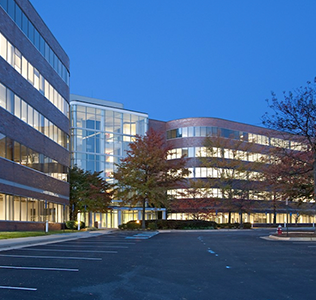
Carahsoft Conference & Collaboration Center
11493 Sunset Hills Road
Suite 100
Reston, VA 20190
Hosted & Moderated By:




12:00pm – 12:55pm: Registration & Check-in
1:00pm – Session 1: OCUDU – The Search for Open Source Hardware
OCUDU (Open Centralized Unit/Distributed Unit) is a collaborative initiative and open-source project, hosted by the Linux Foundation, aimed at accelerating the development and deployment of 5G and 6G Open Radio Access Networks (Open RAN). It provides a common, carrier-grade, open-source software foundation for the CU and DU layers, which are critical components of radio access networks. The intent of OCUDU is to break vendor lock-in and accelerate the transition from proprietary, hardware-locked RAN systems to software-defined, open ecosystems.



2:00pm – Session 2: Turning Mobile Devices into Radar
Integrated Sensing and Communication (ISAC) is a 6G technology that enables wireless networks to simultaneously transmit data and detect objects, essentially turning mobile networks into radars. It uses shared radio signals, infrastructure, and hardware to track, locate, and image objects in real-time, improving network efficiency and enabling new, high-precision services. ISAC reduces hardware costs and saves spectrum resources by consolidating functions. It is considered a cornerstone of 6G, enabling faster, more reliable communication.



3:00pm – Session 3: Maximizing 5G While Waiting for 6G – the Role of AI
Today’s advanced 5G networks are the essential first step to create an intelligent digital fabric. They provide higher upload speeds and open network interfaces for developers to use. They also make networks more programmable and easier to automate. So while the future may be 6G, investments made today into building out 5G and 5G standalone (5G SA) networks will not be stranded; they enable AI apps today and will be incorporated into the rollout of 6G tomorrow.

Chief Digital Transformation Officer,
Capability Program Executive Aviation, U.S. Army


4:00pm: Networking & Reception
