
Thursday, April 3, 2025 | 12:00PM – 5:00PM EDT | 3 CPE | Reston, VA
Artificial Intelligence, Zero Trust & Other Considerations
Federal agencies understand that cybersecurity has to be the foundation of their operations, from online to back office.
For instance, the telecommunications breach by Salt Typhoon, a Chinese government-backed hacking group, targeted both U.S. political leaders and national security information. First detected in early summer, in December the Cybersecurity and Infrastructure Security Agency (CISA) said at a press conference there is no way to estimate how long it will take for the hackers’ access to be shut down.
One major challenge for agencies is how to meet these requirements while looking for ways to incorporate new technologies that can streamline their operations. The biggest example of this is the explosive advent of artificial intelligence (AI) as a tool that agencies are tasked to incorporate.
COMPLIMENTARY TRAINING (3 CPE Credits) – DISCUSSION & HAPPY HOUR FOR STATE & LOCAL GOVERNMENT
Join us at this in-person event as thought leaders from government and industry share their thoughts on emerging cyber threats, the processes and tools they find most useful to thwart attacks, and the progress they are making on meeting federal technology and security mandates.
CyberSmart 2025 – Will Discuss:
CyberSmart2025 – Accreditation:
Participants can earn 3 CPE credits in Business Management & Organization.*
* To receive CPE credit you must check in at the registration desk when you arrive, and fill out/turn in your valuation PE form as you leave. Certificates will be e-mailed to registrants. In accordance with the standards of the National Registry of CPE Sponsors, 50 minutes equals 1 CPE. By providing your contact information to us, you agree: (i) to receive promotional and/or news alerts via email from Federal News Network and our third party partners, (ii) that we may share your information with our third party partners who provide products and services that may be of interest to you and (iii) that you are not located within the European Economic Area.
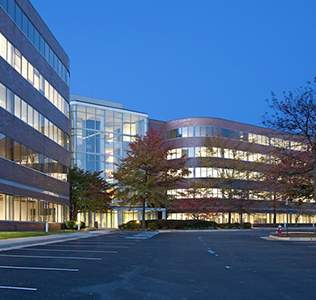
Carahsoft Conference & Collaboration Center
11493 Sunset Hills Road
Suite 100
Reston, VA 20190
CyberSmart 2025: Hosted by




CyberSmart 2025: Check-in & Welcome
12:00 noon – 12:59 pm
Welcome! Register or check in with our FedInsider team.
Session 1: The Role of AI in Cybersecurity
1:00 pm – 1:55 pm
Both public and private sector cyber experts recognize that AI represents a new level of threat, such as fear of AI-generated deepfakes that could allow bad actors to circumvent mechanisms to confirm legitimate users’ identities. But AI also offers new opportunities to enhance security, by preventing attacks, automating threat responses, and detecting anomalies in user behavior.
Our panel of government and industry experts share their experiences in harnessing AI to confront the continually evolving threat landscape and how agencies can put AI squarely on the side of defending against bad actors.


CISO, Office of the Chief Technology Officer, Government of the District of Columbia

Session 2: Meeting Zero Trust Requirements in the Cloud
2:00 pm – 2:55 pm
One of the government’s biggest cyber initiatives is the requirement to incorporate Zero Trust (ZT) architecture as a baseline security measure. Executive Order 14028, Improving the Nation’s Cybersecurity, states that we must “advance toward Zero Trust Architecture… to protect and secure its computer systems, whether they are cloud-based, on-premises, or hybrid.” Simultaneously, the General Services Administration’s Federal Risk and Authorization Management Program (FedRAMP) expects cloud providers to meet this requirement; as federal agencies modernize and adopt cloud solutions, they are mandated to use FedRAMP authorized Cloud Service Offerings (CSO) for any public cloud delivered service.
Our panel of government and industry experts will discuss the role of ZT in meeting multi-cloud security requirements.


Session 3: Identity is Everything
3:00 pm – 3:55 pm
Protecting a user’s identity – who the user is, what they are allowed to access, whether they can edit and copy data, etc. – lies at the heart of cybersecurity. It’s also like having millions of users with a copy of your door key; it only takes one user’s carelessness to unlock the door.
Zero trust, for example, is about never trusting, always verifying a user’s identity. One of the biggest fears about AI is the possibility of generating a false persona that appears real or creating an online deepfake of a real person that can wreak havoc with the systems it can enter. The National Institute of Standards and Technology recently released draft guidelines that include expanded identity proofing models, applicable to both government agencies and contractors.
Our panel of government and business experts will outline the central importance of identity management and verification, how to strengthen identity verification processes, and how to evaluate their success.


CyberSmart 2025: Closing Comments & Networking Reception
4:00 pm – 5:00 pm
Join us for a Networking reception afterward! There will be a variety of delicious fare & drinks. This is a unique and amazing opportunity to network with your State, local and industry peers.
